Roth 401(k) to Gold IRA Rules (2026 Guide)
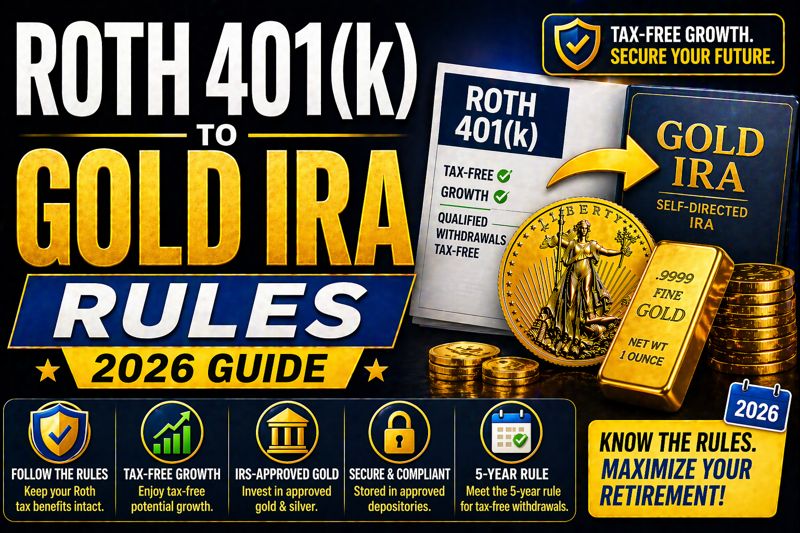
If you have a Roth 401(k) and are considering diversifying into gold, understanding the Roth 401(k) to Gold IRA rules is essential. Unlike traditional rollovers, Roth accounts come with unique tax advantages and regulations.
In this 2026 guide, we’ll break down the Roth 401(k) to Gold IRA rules, eligibility, tax implications, and step-by-step process to help you move your retirement funds safely.
What Is a Roth 401(k) to Gold IRA Rollover?
A Roth 401(k) to Gold IRA rollover involves transferring after-tax retirement funds into a self-directed Roth Gold IRA that allows investment in physical gold.
The key benefit is that qualified withdrawals remain tax-free, even after investing in gold.
Key Roth 401(k) to Gold IRA Rules (2026)
1. Funds Must Go Into a Roth IRA
You cannot roll a Roth 401(k) into a traditional IRA without tax consequences. To maintain tax-free benefits, funds must be transferred into a Roth Gold IRA.
2. Direct Rollover Is Required
A direct rollover ensures you avoid penalties and maintain the tax-advantaged status of your account.
3. 5-Year Rule Applies
To withdraw earnings tax-free, your Roth IRA must meet the 5-year holding rule.
4. IRS-Approved Metals Only
You can only invest in gold that meets IRS standards, such as specific coins and bullion.
Benefits of Roth 401(k) to Gold IRA Rollover
1. Tax-Free Growth
One of the biggest advantages of following proper Roth 401(k) to Gold IRA rules is tax-free growth on your investment.
2. Inflation Protection
Gold helps protect purchasing power over time, especially during inflation.
3. Diversification
Adding gold reduces reliance on stock market performance.
Step-by-Step Process for Roth 401(k) to Gold IRA Rollover
Step 1: Choose a Gold IRA Provider
Select a reputable company that offers Roth Gold IRA accounts.
👉 Compare providers here: Best Gold IRA Companies 2026
Step 2: Open a Roth Gold IRA
Ensure the account is specifically set up as a Roth IRA to maintain tax benefits.
Step 3: Initiate Direct Rollover
Transfer funds directly from your Roth 401(k) to your new account.
Step 4: Purchase Gold
Invest in IRS-approved gold stored in an authorized depository.

Tax Implications You Must Know
- ✔ No taxes if rolled into Roth IRA correctly
- ✔ Tax-free withdrawals after age 59½
- ✔ Penalties may apply for early withdrawals
👉 Learn full cost breakdown: Gold IRA Fees Explained (2026)
Common Mistakes to Avoid
- ❌ Rolling into a traditional IRA accidentally
- ❌ Ignoring the 5-year rule
- ❌ Choosing non-approved gold assets
- ❌ Using indirect rollover (can trigger taxes)
Who Should Consider a Roth 401(k) to Gold IRA Rollover?
This strategy is ideal for investors who:
- Want tax-free retirement income
- Expect higher taxes in the future
- Want long-term wealth protection
Roth 401(k) vs Traditional 401(k) for Gold IRA
Roth 401(k)
- After-tax contributions
- Tax-free withdrawals
- Best for long-term growth
Traditional 401(k)
- Pre-tax contributions
- Taxed on withdrawal
- Immediate tax benefits
Final Thoughts
Understanding Roth 401(k) to Gold IRA rules is essential before making a move. When done correctly, this rollover offers tax-free growth, diversification, and long-term security.
Gold can play a powerful role in protecting your retirement—especially when combined with the tax advantages of a Roth account.
FAQs
Can I roll a Roth 401(k) into a Gold IRA?
Yes, but it must be rolled into a Roth Gold IRA to maintain tax benefits.
Is the rollover taxable?
No, if done correctly as a direct rollover.
What happens if I break the 5-year rule?
You may have to pay taxes on earnings withdrawn early.
Protect Your Retirement with Physical Gold
Download your FREE Gold IRA Guide and compare trusted companies for retirement diversification and wealth protection.
Get My FREE Gold IRA Guide →No obligation • Free educational guide