Gold Performance 2026: Lessons from History During Energy Market Crashes
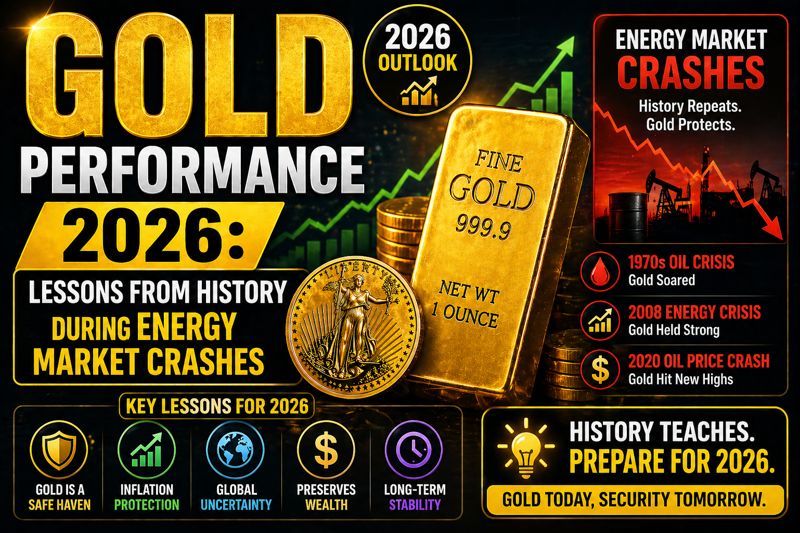
The financial headlines of April 2026 have been a whirlwind. One week, the Strait of Hormuz is at risk, sending WTI Crude to $120. The next, a two-week ceasefire is announced, and oil prices plunge 20% overnight. For the average investor, this volatility is terrifying. However, if you look at gold performance 2026, a very different story is unfolding.
While oil is a “growth” commodity that thrives on industrial consumption, gold is a “monetary” asset that thrives on uncertainty. Understanding the historical “Energy-to-Gold” lag is the key to protecting your retirement this year.
1. The 2026 “Liquidity Flush”: Why Gold Fell Initially
In March 2026, many were shocked when gold dropped alongside oil. This wasn’t because gold lost its value—it was a liquidity event. When oil prices spiked and then crashed, institutional “paper” traders had to sell their gold positions to cover losses in other sectors.
However, as we move into mid-April, the gold performance 2026 is decoupling from the paper markets. Physical premiums remain high, and central banks (like the Reserve Bank of India) are continuing to buy the dip, seeing $4,800 as a major support level.
2. Historical Context: Gold vs. Oil Shocks
To understand gold performance 2026, we must look at the “Phase 2” of previous energy shocks:
- 1973 Oil Embargo: Gold didn’t react instantly. It took a year for the energy costs to bake into the economy, after which gold surged over 70%.
- 1979 Iranian Revolution: A similar pattern emerged where a supply shock eventually led to gold hitting then-record highs.
- The 2026 Forecast: Goldman Sachs and J.P. Morgan are maintaining targets between $4,900 and $6,300 for late 2026. They argue that while oil crashes on “ceasefire news,” the underlying debt and inflation issues that drive gold haven’t been solved.
3. The “Gold/Oil Ratio”: A Warning Signal
The Gold/Oil ratio tells us how many barrels of oil one ounce of gold can buy. In April 2026, this ratio is historically elevated.
- High Ratio = High Fear: When the ratio is high, it means the market is pricing in a “dangerous mix” of geopolitical risk and economic fragility.
- The Verdict: Even if oil stays low (averaging $59 in some forecasts), gold is being supported by “safe-haven” demand that has nothing to do with gas prices.

4. Strategic Move: Buying the 2026 Pullback
For those looking at gold performance 2026, the recent dip from $5,300 to the current $4,800 range is what experts call a “reset.” Pullbacks are healthy in a bull market; they shake out weak hands and provide a entry point for long-term IRA investors.
Also read this: Unsure if this volatility makes gold a “good” bet for you? See our [Is a Gold IRA a Good Investment?] guide for a full pros and cons list.
🛡️ Protect Your Wealth from the Energy Rollercoaster
Oil may crash, but your retirement doesn’t have to. Gold remains the only asset that “absorbs” fear rather than chasing it.
Get the 2026 FREE Gold IRA Guide See the full 12-month gold forecast from Augusta Precious Metals and learn why $4,800 is the most important support level of the decade.
Conclusion: Gold is the “Monetary Anchor”
While the crude oil market continues its supply-driven downtrend, the gold performance 2026 outlook remains structurally bullish. In a world of elevated debt and fragile alliances, physical gold isn’t just an investment—it’s the anchor that keeps your portfolio from drifting away in the storm.